Quantum optics, a fascinating and dynamic field of research, combines the principles of quantum mechanics with optics to study the behavior of light on the smallest possible scale—that of individual photons or photons – zu erforschen. Dieses Gebiet hat nicht nur bedeutende theoretische Implikationen, sondern auch weitreichende praktische Anwendungen, die die Zukunft der Technologie und Wissenschaft prägen könnten.
Fundamentals of Quantum Optics
Die Quantenoptik ist ein hochkomplexes und spannendes Forschungsfeld, das die Prinzipien der Quantenmechanik auf die Optik anwendet. Im Mittelpunkt dieses Bereichs steht das Verhalten von Licht auf der Ebene von Single photons, the smallest Quanta electromagnetic radiation. These fundamentals provide not only deep insights into the nature of light, but also into the fundamental principles of quantum mechanics yourself.
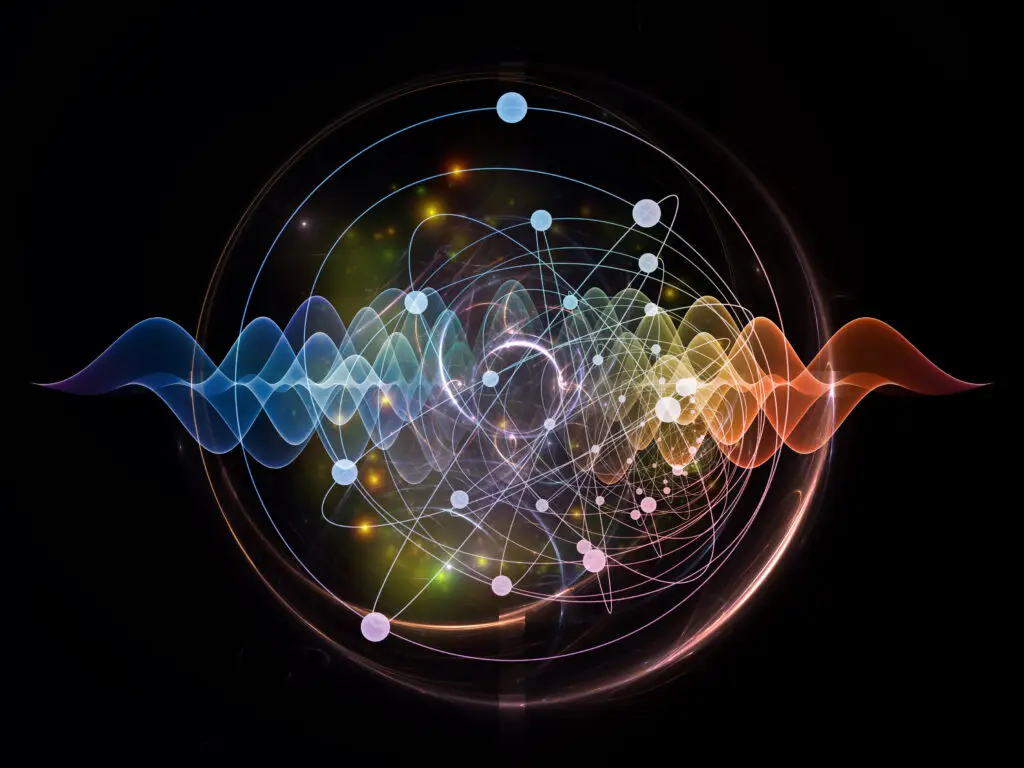
Ein zentrales Konzept der Quantenoptik ist die The Duality of Light, which can be described as both a wave and a particle. This duality is a cornerstone of quantum mechanics and leads to a better understanding of the properties of light. In classical Wave Model Light is described as an electromagnetic wave that propagates through space. This model explains phenomena such as diffraction, interference, and Polarization. Light waves can interfere with one another by reinforcing or canceling each other out, resulting in characteristic patterns. In the Particle Model In contrast, light is regarded as a stream of discrete particles, which photons. This model is particularly useful for explaining phenomena such as the photoelectric effect, in which light Electrons can be emitted from a metal surface. Quantum mechanics describes light as a collection of photons, which explain the wave properties of light in certain situations.
The Quantization of Light is a key concept in quantum optics. According to quantum mechanics, light does not exist as a continuous entity, but rather in discrete packets—the photons. The statistics describing the distribution of photons is another important aspect. photons can be in various statistical states that have different properties, such as Bose-Einstein statistics for bosons (photons) and Fermi-Dirac statistics for fermions. These statistics describe the behavior of two fundamental types of particles in quantum mechanics: bosons and fermions. Bose-Einstein statistics describe bosons such as photons, which can occupy the same state because their wave function is symmetric. This leads to phenomena such as Bose–Einstein condensation. In contrast, Fermi–Dirac statistics apply to fermions, which are subject to the Pauli exclusion principle, meaning they can never occupy the same state because their wave function is antisymmetric.
The Quantum entanglement is another fascinating phenomenon in quantum optics that reveals the deeper connection between photons describes. Two or more photons may be in a state in which the properties of a photons instantly take on the characteristics of another photons influence each other, no matter how far apart they are. This state is referred to as “entangled.” Entangled photons are connected to each other, so that measuring one photons instant information about the other person Photon provides.
Advances and Developments in Quantum Optics
In recent decades, quantum optics has made enormous strides, particularly through developments in the Quantum Communication and Quantum Computing. This progress is largely attributable to intensive research and development at various international research centers.
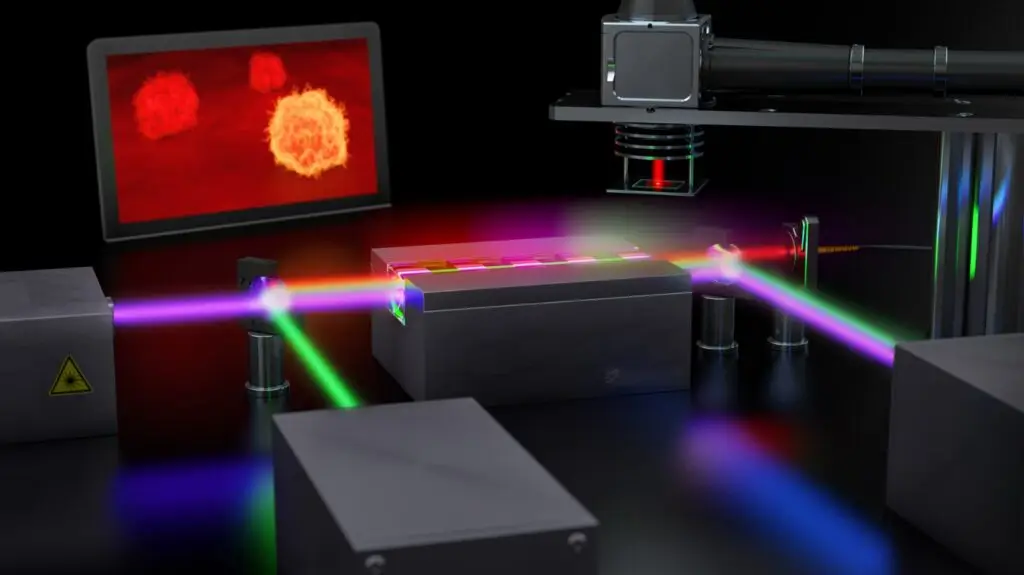
The Max Planck Institute for Quantum Optics, located in Garching near Munich, is one of the world's leading institutions in quantum optics research. The institute focuses on the generation, control, and manipulation of Single photons and their interactions with Atoms and molecules. A major area of research at the MPQ is the development of quantum simulators. These simulators make it possible to model and study complex quantum mechanical systems, which is of great importance for basic research.
The Fraunhofer IOF Jena is home to another leading research center that has made significant advances in quantum optics. In 2021, the institute announced new developments in the Quantum Communication and –computing announced. Of particular note is the work on quantum computers, which is made possible by advances in the stability and precision of quantum experiments. The quantum computers being developed at the IOF could significantly increase processing capabilities and open up new possibilities for solving complex problems.
The Future of Quantum Optics
The future of quantum optics is promising and marked by dynamic developments. The ongoing advances in the Quantum Communication, Quantum Computing and metrology could lead to revolutionary changes in many fields. Research into the quantum world opens up new horizons for scientific discoveries and technological innovations that may have far-reaching implications for our daily lives. In summary, quantum optics is a fascinating and rapidly evolving field of research that is expanding the boundaries of our understanding of light and matter. The significant advances being made at leading institutions such as the Max Planck Institute for Quantum Optics and the Fraunhofer IOF are just the beginning of an exciting journey into the world of light quanta and their applications. The coming years will certainly bring further groundbreaking developments that will deepen our understanding of the quantum world and give rise to new technologies.
Sources
https://www.iof.fraunhofer.de/de/presse-medien/pressemitteilungen/2021/quantum-optics-jena.html
Horizonte. Quantentechnologien. (2020). acatech – Deutsche Akademie der Technikwissenschaften.
Göbel, H. (2022). Quantenmechanik. Eine Einführung in die Welt der Wellen und Wahrscheinlichkeiten. Berlin/Boston: Walter de Gruyter GmbH