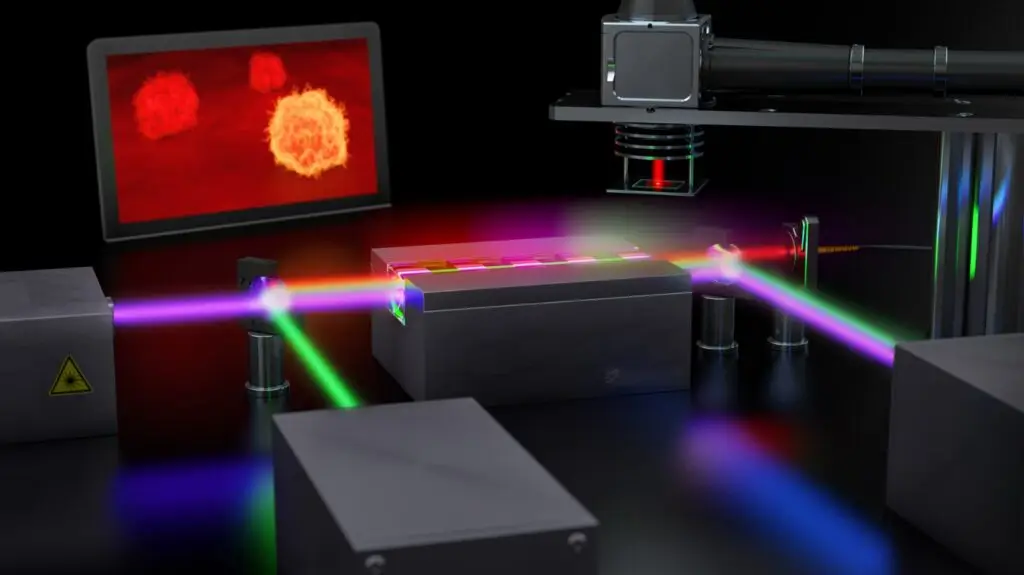
Quantum technologies are not new. They have long played a role in modern technology. Examples of applications from the first quantum revolution, which are based on collective quantum effects, include lasers, atomic clocks, GPS, and MRI. The second quantum revolution, on the other hand, refers to the targeted manipulation of individual quantum systems. Technologies such as Quantum Computing, Quantum cryptography and quantum sensors now make use of specific quantum effects such as the Entanglement and Superposition.
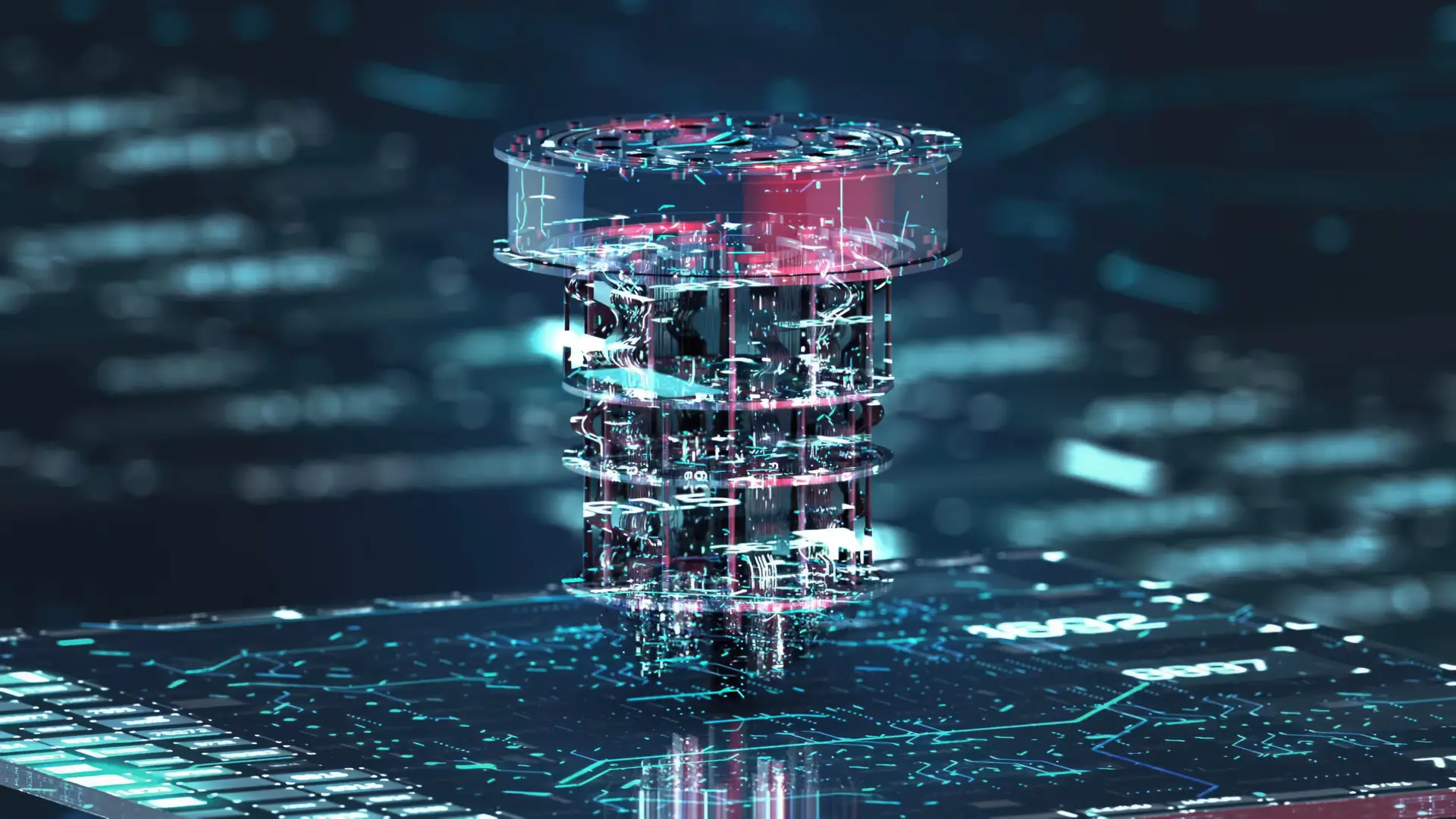
Quantum computing represents a profound change in the way computers solve problems. The market is projected to double to ten billion dollars a year, and companies such as VW and BMW are already using the technology for their own purposes. While conventional computers process information using electrical and optical pulses through Bits process data that can take on either the value 0 or 1, use Quantum computer qubits. This qubits Due to the principles of quantum mechanics, they can take on not only 0 or 1, but also both states simultaneously, and thus represent intermediate states. This ability makes it possible to Quantum Computers, to perform significantly more calculations in parallel than traditional computers, thereby far surpassing them in computing power. Quantum computer make use of the interactions between quantum mechanical states, which are described by probabilities. However, it is not just the number of qubits not only relevant, but also the quality of the system, which is determined by the entanglement and the Coherence time, that is, the time during which the system remains stable.
Fundamental Principles of Quantum Computing
Quantum computer are based on the fundamental principles of quantum mechanics, particularly the phenomena of superposition and entanglement:
- Overlay: A qubit may be in a state that is a combination of 0 and 1, which is referred to as Overlay is called. This property allows Quantum Computers, to perform multiple calculations at the same time. This is similar to a spinning coin that shows both heads and tails at the same time until it reaches a specific result.
- Quantum entanglement: Two qubits can be entangled with one another, which means that the state of a qubits directly affects the state of the other, regardless of the distance between them. This entanglement enables extremely fast and efficient information processing that classical computers cannot achieve.
Quantum computer use special quantum gates to qubits to manipulate and form quantum circuits capable of executing complex algorithms. These quantum circuits form the backbone of computational operations in Quantum Computers and enable them to solve problems that are unsolvable for traditional computers.
Applications and Potential of Quantum Computing
Quantum computing has the potential to fundamentally transform many industries and create new possibilities that are unattainable with classical computers. One promising area of application is the Materials Science and Chemistry. Quantum computer are capable of simulating extremely complex molecular structures, something that is often impossible with conventional computers or takes an extremely long time. This capability could significantly accelerate the development of new materials and drugs.
Another important area of application is the Artificial Intelligence (AI) and Machine Learning. Quantum computer could significantly speed up the processing and analysis of large amounts of data required in these fields. Through the parallel processing of information, AI models could be trained and refined more quickly. This would not only increase the efficiency of AI systems but also enable the development of new, more advanced AI applications.
In the Cryptography Quantum computing could pose both a threat and an opportunity. Quantum computer have the potential to crack conventional encryption methods—on which many of today's security systems are based—in a very short time. This poses a significant threat to data security and requires the development of new, quantum-secure encryption methods.
Another area where quantum computing could offer groundbreaking solutions is Optimization Problems. In many industries—such as logistics, finance, and industrial production—there are complex optimization problems that involve allocating specific resources in the best possible way or designing processes to be as efficient as possible. Quantum computer could provide significantly faster and more accurate solutions here than conventional computers. For example, they could help optimize supply chains, better manage traffic flow, or make production processes more efficient.
Challenges and Future Prospects
Despite the enormous potential offered by quantum computing, we still face significant challenges that must be overcome. One of the key difficulties lies in what is known as Decoherence. qubits, the fundamental building blocks of a Quantum Computers, are extremely sensitive to external disturbances such as temperature changes, electromagnetic fields, or vibrations. These disturbances can affect the quantum mechanical states of the qubits destroy, causing the superposition to be lost and the quantum computer to lose its advantages over classical computers. The Decoherence times, that is, the time during which a qubit remain stable, are currently very short and often last only a few microseconds. Therefore, it is a major challenge to, qubits to stabilize them and monitor them accurately over extended periods of time.
Another problem is the Error Correction. Because of their sensitivity, they tend to Quantum computer tend to produce errors more frequently than classical computers. While classical computers use relatively simple error-correction mechanisms, error correction in Quantum Computers significantly more complicated. Quantum algorithms are complex and require specialized error-correction methods that are still under development.
A third, important point is the Scalability. Current Quantum computer work with only a few qubits. However, to solve the truly complex problems of the future, we would need systems with hundreds of thousands or even millions of qubits required. The technology is still reaching its limits in this regard.
In addition to these technical challenges, there are also economic and logistical hurdles. The construction and operation of a Quantum Computers ist kostspielig und erfordert spezialisierte Einrichtungen, die nur wenigen Forschungsinstituten und Unternehmen zur Verfügung stehen. Um Quantencomputing breiter zugänglich zu machen, müssen daher kosteneffizientere Lösungen entwickelt werden.
Sources
https://www.infineon.com/cms/de/discoveries/quantum-computing/
Horizonte. Quantentechnologien. (2020). acatech – Deutsche Akademie der Technikwissenschaften.