





Eve on a Mission – The Game
Versuche als Eve den Quantenkanal von Alice und Bob zu hacken und ihre Nachrichten mitzulesen.
How does it work?
Take on the role of the hacker Eve. Your neighbors Alice and Bob have set up a secret quantum channel. Your goal is to crack their key so you can read their messages.
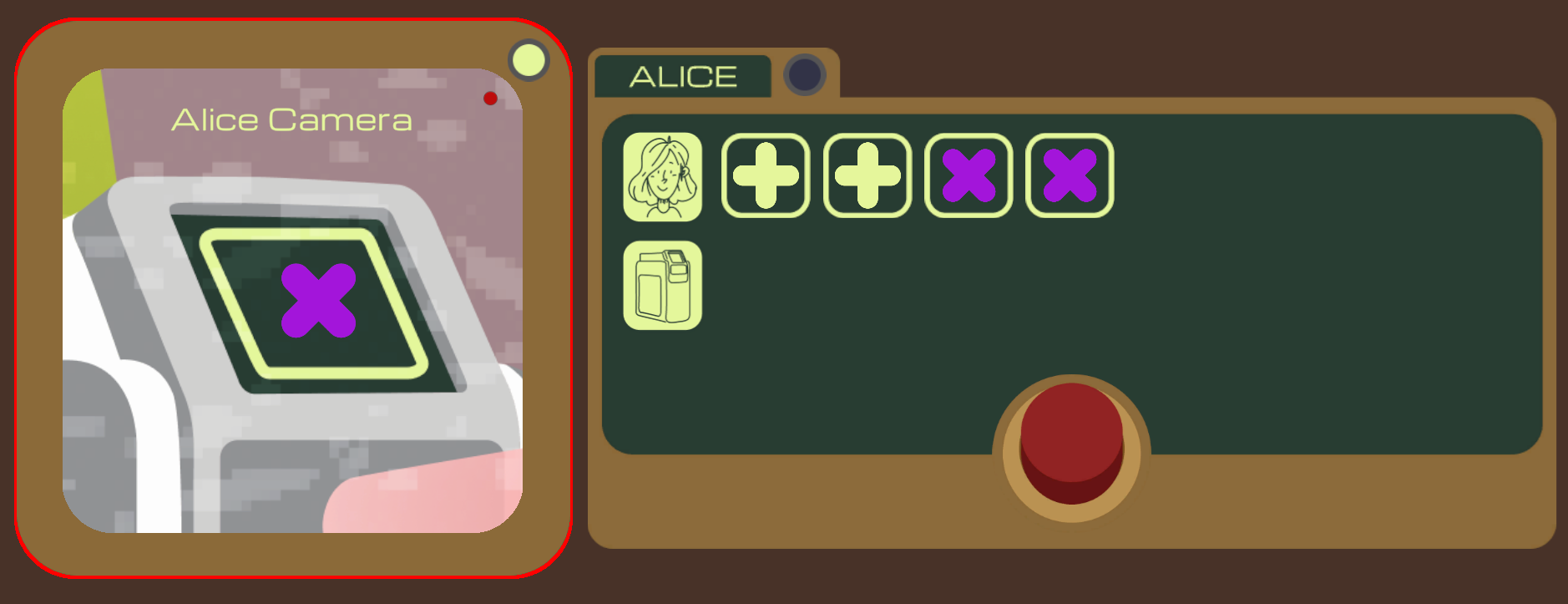
You have installed a camera on Alice and can observe the orientation of her filter bases (“+” or “x”) on a small monitor. Memorize the sequence and enter it into Alice’s console.
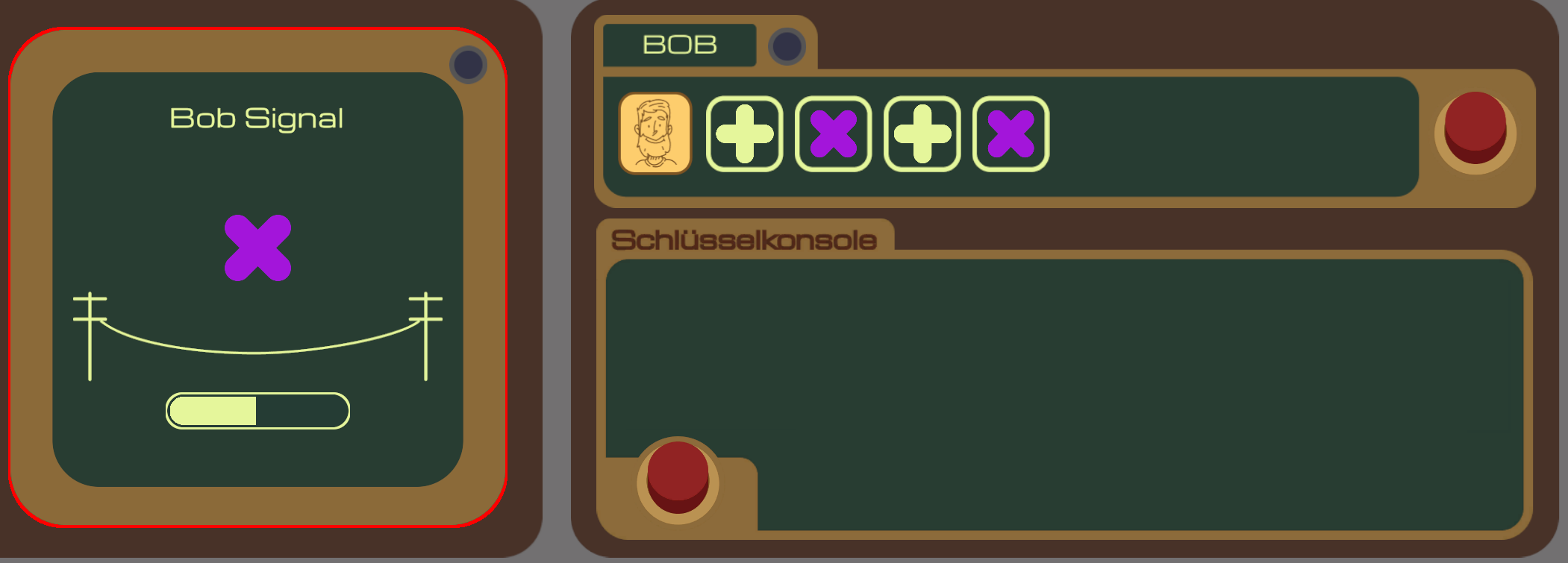
Since you've tapped into the classic communication channel, you'll receive information about Bob's measurements. Make a note of this sequence of “+” and “x” symbols and enter them into Bob's console.
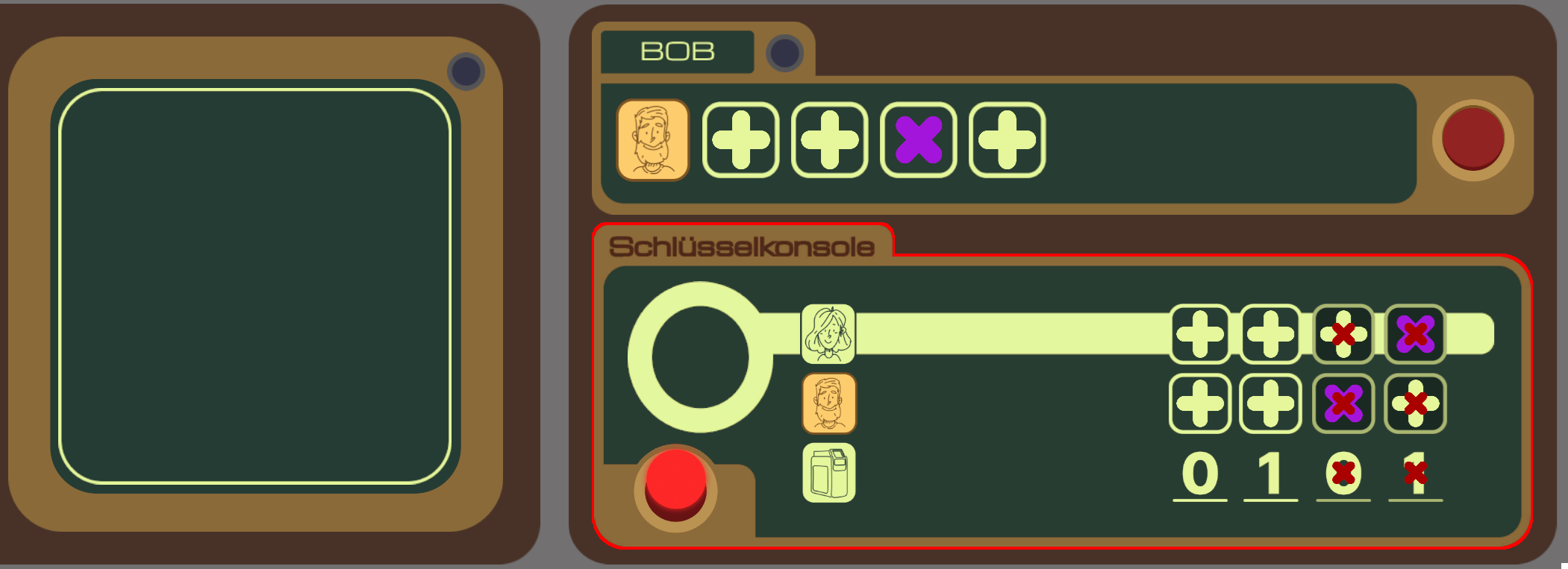
If you've followed both measurements correctly, all you have to do is remove any errors from the sequence of zeros and ones. To do this, cross out the measurement results in the key console that don't have the same base.
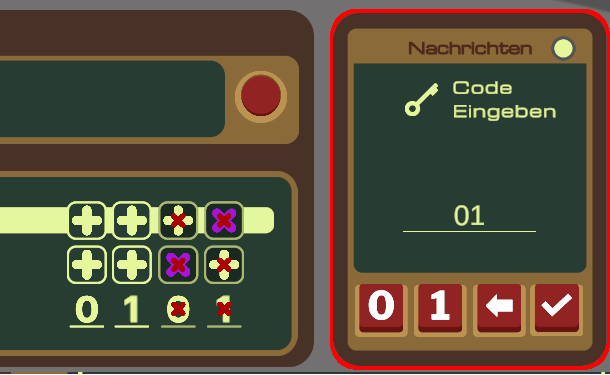
You can enter the remaining code in the message window. If you're correct, you'll be able to read the messages.
With each round, you have to memorize longer sequences. Will you uncover the secret of Alice and Bob?
Das BB84 Protocol is a method by which two people—traditionally referred to as Alice and Bob—can exchange a shared secret key.
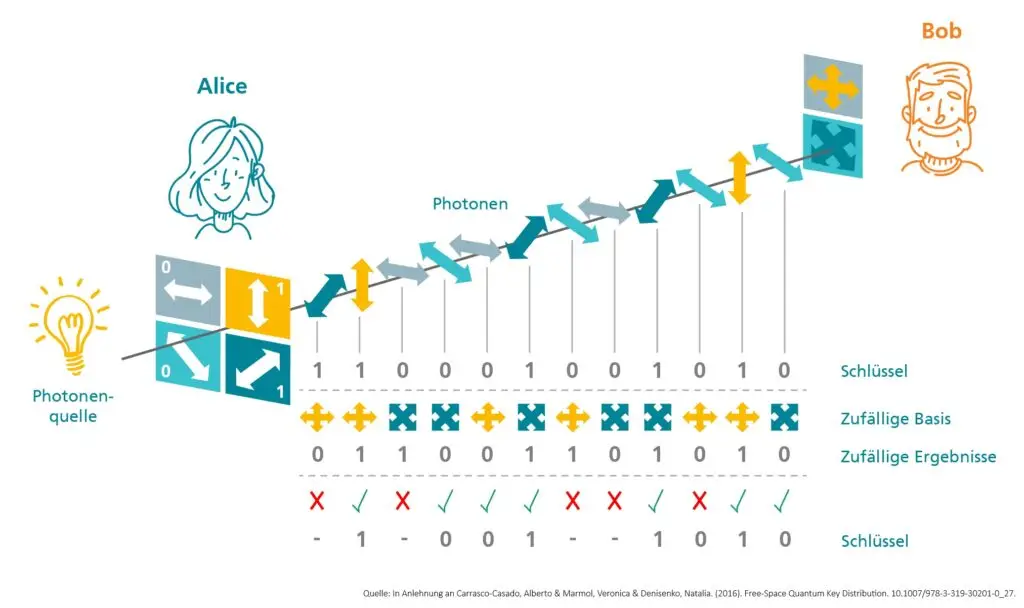
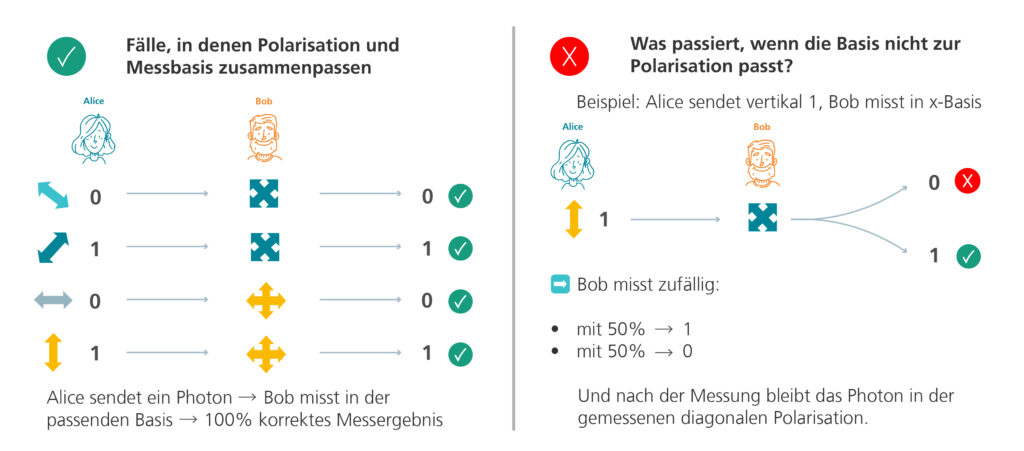
Imagine that Alice and Bob want to share the same secret numerical code without transmitting it directly. To do this, they use individual photons— photons –, whose Polarization one 0 or 1 means. There are two simple “Lenses” (filter bases) zum Messen: die „+“-Brille for horizontal/vertical and the “X” glasses for diagonal/antidiagonal.
Alice prepares each photon randomly: she chooses one of the two pairs of glasses and sets the polarization so that it encodes a 0 or a 1. She then sends the photon to Bob. Bob, in turn, also decides for each incoming photon by chanceIt depends on which set of glasses he uses to measure. If Alice’s and Bob’s glasses match, Bob reads the correct bit; if they don’t match, his result is pure coincidencepurely by chance. After the measurement, the photon is “used up”—it cannot be measured again.
Afterward, Alice and Bob use a standard data connection to discuss only which glasses they each used—the bits themselves remain secret. They keep track of the positions at which they the same glasses have used, and throw the rest away. The leftover bits are used to create the Raw key.
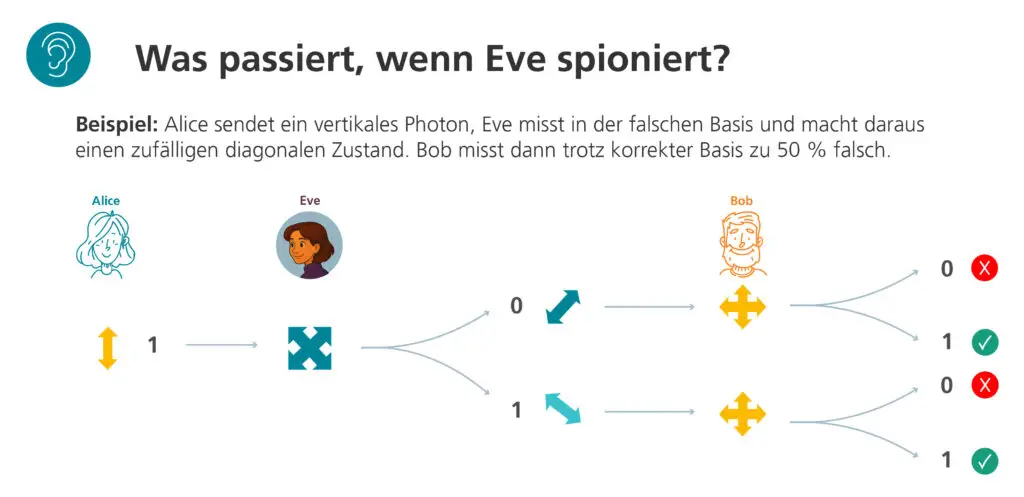
If Eve tries to eavesdrop, she has to Guess the basis. If the photon were measured or recreated, it would cause a time shift, and she would be exposed. If she guesses wrong, Errorsthat Alice and Bob notice in brief checks. In real systems, they subsequently reconcile minor differences using a Fehlerkorrektur aus und kürzen den Rohschlüssel so, dass man selbst mit ein paar bekannten Bruchstücken keine Informationen erhalten kann.
This results in both sides having the same secret master key—it was never transmitted, but rather generated.
Anyone listening in has to guess the “base.” If the choice is wrong, the results become random and produce errors that Alice and Bob notice immediately when they compare them.
In the quantum world, unknown photon states cannot be cloned without loss. Every attempt to copy them alters the state and leaves detectable traces.
Over the classic channel, Alice and Bob share only bases and auxiliary information, never the actual bits. The final key is generated separately by each of them and is not transmitted.
Our website “Quantum Compass” and the game “Eve on a Mission” are designed to introduce you to the exciting world of quantum communication. But how well are we succeeding?
Join in, tell us what you think, and with a little luck, you could win some great prizes.